

If your usual habits no longer feel as effective in midlife, it can be tempting to eat less and push harder. Before making another demanding plan, give yourself room to understand what is changing.

November 14 is World Diabetes Day, a useful reminder to bring blood sugar into your midlife health conversation. [1] Perimenopause is an opportunity to review your risks and your routines, especially if your last appointment focused mainly on periods or hot flashes.
What a changing body can tell you
Research from the Study of Women's Health Across the Nation, or SWAN, found that the menopause transition was associated with faster gains in fat mass and losses of lean mass. These changes were not fully reflected by the number on the scale. This was an observational study of body composition, not proof that menopause causes diabetes. [2]
Your own assessment needs more context. Family history, age, activity, a history of gestational diabetes, and certain medications can influence the chance of developing insulin resistance or prediabetes. [3] Bring that history to the conversation rather than judging your health by your weight alone.
Prediabetes can be quiet
Insulin helps your body manage glucose, the sugar in your blood. With insulin resistance, the body responds less effectively to insulin. Prediabetes means glucose is above the usual range but below the threshold used to diagnose diabetes. People with insulin resistance or prediabetes often have no symptoms. [3]
Fatigue, cravings, or changes in how your clothes fit cannot tell you whether you have prediabetes. Ask your clinician whether you are due for blood testing, particularly if diabetes runs in your family or you had diabetes during pregnancy. [3,4]
Know which tests answer the question
An A1c test estimates your average blood glucose over roughly three months. A fasting plasma glucose test measures your level after an overnight fast. The following thresholds apply to adults who are not pregnant. [4]
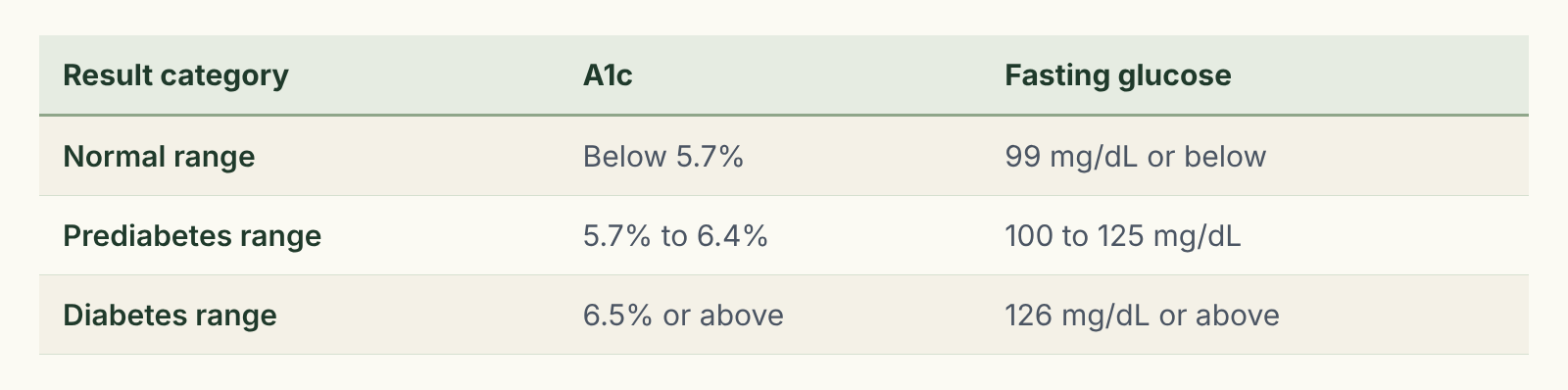
Your clinician interprets these results with your medical history. A diabetes-range result usually needs a second test for confirmation; a home glucose meter cannot establish the diagnosis. Some health conditions can also affect A1c accuracy. [4]
Build a plan you can live with
The next step should make sense in your actual life. Start with one change you can repeat, then build on it with support.
Make meals more balanced. A practical starting point is half a plate of nonstarchy vegetables, a quarter of protein, and a quarter of carbohydrate foods. Choose water or an unsweetened drink more often. Your care team can adapt portions to your medicines, preferences, and needs. [5]
Keep familiar foods in the conversation. Rice, beans, yams, and family recipes can be discussed as part of a personalized eating plan. Cultural preferences and food access belong in the plan. A dietitian or diabetes educator can help you work out portions and combinations. [5]
Choose movement you can sustain. If you have been inactive, start gradually with an activity that suits your health and mobility. For diabetes prevention, a common goal is about 150 minutes of activity a week, adjusted with your clinician's guidance. [6]
Ask for ongoing support. In the U.S. Diabetes Prevention Program, an intensive lifestyle program lowered the risk of developing type 2 diabetes by 58% compared with placebo over about three years in adults at high risk. The program combined activity, dietary changes, weight-management goals, and sustained coaching. [6]
You can also ask how medications, sleep concerns, and other health conditions fit into your care. A useful plan considers what you can afford, the time you have, and the support available to you.
Bring your questions to My Native Doctor
At My Native Doctor®, we offer physician-led integrative women's health consultations that bring your symptoms, prior results, medications, and daily routines into one discussion. We collaborate with your primary care clinician and other specialists when needed.
In-person consultations are available in Chicago, with virtual consultations for patients located in Illinois, California, Maryland, and North Carolina.
Book an integrative women's health consultation
This article provides general education. Screening, diagnosis, and treatment should be individualized with your healthcare clinician.
Sources
[1] World Health Organization. World Diabetes Day.
[4] National Institute of Diabetes and Digestive and Kidney Diseases. Diabetes Tests and Diagnosis.
[5] Centers for Disease Control and Prevention. Diabetes Meal Planning.
[6] National Institute of Diabetes and Digestive and Kidney Diseases. Diabetes Prevention Program.