

Corrected age (also called adjusted age) is your baby's age based on their original due date, not their actual birth date. It's used to track development and growth for premature babies, generally till age 2.
If you've ever compared your baby to a full-term baby the same age and felt like something was "behind," there's a good chance you were comparing the wrong number and your baby is developing normally.
What Is Corrected Age?
A baby born early has two dates that matter: the day they were born, and the day they were due. Calendar age counts from birth. Corrected age counts from the due date and for a premature baby, it's the one pediatricians use to judge whether development is on track.
This is a standard clinical practice, used by the American Academy of Pediatrics and every major pediatric organization, because a baby's organs, brain, and body were still developing in the womb for however many weeks they missed.
How Do You Calculate Your Baby's Corrected Age?
It’s easy. The math takes about ten seconds:
Take your baby's age in weeks since birth
Subtract the number of weeks they arrived early
Example: A baby born at 32 weeks (8 weeks early) who is now 6 months (about 26 weeks) old has a corrected age of about 4 months (18 weeks). Compare that baby's milestones to a 4-month-old's, not a 6-month-old's.
Why Does Corrected Age Matter for Milestones?
Milestones like rolling over, sitting up, or babbling are tied to the development of your baby's nervous system. You’re not counting how many days have passed since delivery but by the corrected age. Using the corrected age, you calculated above, here’s a table of what your child’s development should look like:
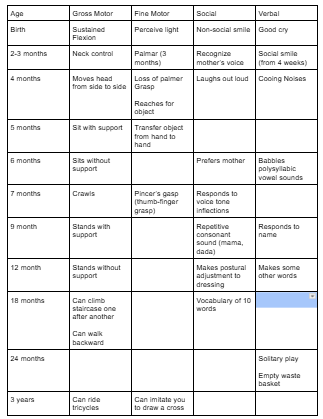
Source: Rule of Thumb' Paediatrics, 7th ed.
This is one of the most common sources of unnecessary worry for NICU parents, and one of the most common things pediatric teams forget to explain clearly in a short visit.
How Long Should You Use Corrected Age?
Generally till about age 2. After that, most children born prematurely have caught up enough developmentally that the gap stops being clinically meaningful, and calendar age takes over.
Does Corrected Age Apply to Vaccines?
No. This is a critical distinction: vaccines follow calendar age, not corrected age. A baby born 8 weeks early still gets vaccinated on the same schedule as a full-term baby born on the same calendar date. Delaying vaccines based on corrected age is a common and understandable mix-up.
What If Something Still Feels Off?
Corrected age explains a lot, but not everything. If your baby loses a skill they previously had, or something feels wrong in a way you can't quite name, that's worth raising with your care team regardless of what the corrected-age math says.
Schedule a consultation to find out what is wrong.
Frequently Asked QuestionsIs corrected age the same as adjusted age?
Yes, the terms are used interchangeably.
Does every premature baby need corrected age tracking?
Generally, any baby born more than 3 weeks early benefits from corrected-age tracking for milestones and growth.
When do I stop using corrected age?
Most pediatric guidelines use corrected age till age 2, after which calendar age is used going forward.
Does corrected age apply to growth charts too, or just milestones?
Both. Weight, length, and head circumference are typically plotted using corrected age on standard growth charts through the same age window.
About Dr. Noredia Alile
Dr. Noredia Alile, MD, FAAP, is a double board-certified pediatrician and neonatologist, and founder of My Native Doctor, a physician-led integrative medicine practice in Chicago. Through the MND Champions program, she offers follow-up consultations for NICU graduates, working alongside each family's existing pediatrician rather than replacing them. Care is available in-person in Chicago and virtually in Illinois, California, Maryland, and North Carolina.
Disclaimer: This content is for educational purposes only. It does not constitute a patient and doctor relationship. If you are having a medical emergency, please dial 911 and/or go to the nearest emergency room.